1

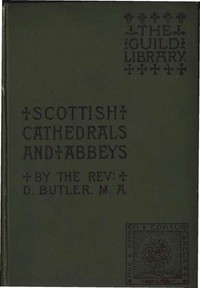
Scottish Cathedrals and Abbeys — Key Ideas to Explore
(0 User reviews)
392
Project Gutenberg
2007
Not confirmed
Cathedrals -- Scotland; Abbeys -- Scotland; Church architecture -- Scotland
Readers of public-domain and historical texts
Project Gutenberg digital edition
en
Edition facts
Words
79,385
Reading time
346 min
Text sections
14
The source record for Scottish Cathedrals and Abbeys — Key Ideas to Explore measures this digital text at 79,385 words, 5 hr 46 min estimated reading time, and 14 detected text sections.
The text analysis averages about 20.4 words per sentence, while the detected sections provide another way to judge how the source is divided.
Project Gutenberg metadata also associates the work with “Cathedrals -- Scotland,” connecting these edition facts with the source record’s subject description.
Source:
Project Gutenberg record #21688
An architectural and historical survey of Scottish cathedrals and abbeys, examining monastic rules, building styles, and the interplay between piety and corruption, with specific focus on Augustinian, Benedictine, and Cistercian foundations.
Read the complete public-domain text at its original source.
Read on Project GutenbergButler's study opens not with a building but with a rule: the canonical hours that structured monastic life—Prime at six, Matins at midnight—and the four principal orders that governed Scotland's religious houses. This emphasis on discipline and schedule sets the tone for a work that treats architecture as the physical expression of spiritual and communal order. The author draws on Ruskin's definitions of art as praise, and repeatedly measures stones against the character of the men who built and inhabited them.
Monastic Rules as Architectural Blueprints
Butler devotes considerable space to classifying the religious orders by their foundational rules: Basil in the East, Augustine for canons, Benedict for Western monks, and Francis for mendicants. He notes that Scottish monasticism followed two main streams—Augustinian and Benedictine—with later orders like the Cistercians and Premonstratensians arising as reforms. This taxonomy is not mere cataloguing; it frames the architectural descriptions that follow. The author implies that the layout of a cloister, the height of a nave, or the austerity of a chapel can be read as a built commentary on the rule observed there. For instance, the Cistercian emphasis on simplicity is contrasted with the more ornate Benedictine traditions, though Butler stops short of detailed comparisons in the excerpts provided.
The Moral Weight of Ruins
Throughout the excerpts, Butler returns to a moral calculus: the beauty of ruined abbeys is inseparable from the corruption that led to their destruction. He writes that monasticism was abolished when it 'had ceased to be spiritual and had become worldly and corrupt,' and that the judgment on things 'is always on character.' This is not a neutral architectural guide but a work that asks readers to see in broken arches a lesson about spiritual decline. The author's voice is that of a clergyman-historian, blending Ruskinian aesthetics with Presbyterian caution. He deplores both the 'rude forces' that destroyed the buildings and the 'indefensible lives' of the monks that provoked them.
A Selective Geography of Scottish Monasticism
Butler explicitly limits his scope to representative houses: Augustinian foundations at St. Andrews, Holyrood, and Jedburgh; the Premonstratensian Dryburgh; Benedictine Dunfermline; Cluniac Paisley; Tyronensian Kelso and Arbroath; and Cistercian Melrose. This list is not exhaustive but strategic, chosen to illustrate the spread of orders and architectural styles across Scotland. The author notes filiations—Melrose and Dundrennan were 'daughters of Rievaux'—tying Scottish abbeys to a European network. The excerpts do not reveal whether Butler provides ground plans or detailed elevations, but his method is clearly comparative, linking each house to its mother foundation and rule.
The Rhetoric of Loss and Legacy
Butler's prose is marked by a recurrent elegiac tone. He speaks of 'a beauty that has passed away from the earth' and of ruins that compel reflection on what was lost. Yet he also insists that the monastic system 'had served its day' in educating the nation. This dual perspective—mourning the destruction while justifying the Reformation—gives the text its distinctive tension. The author does not simply describe; he judges, weighing the 'piety and beauty of former days' against the necessity of reform. Readers should expect a narrative that is as much homily as history, where every shattered capital becomes a text for moral instruction.
Butler's work is best approached as a Victorian moral essay disguised as an architectural handbook. Readers interested in floor plans or construction techniques may find the emphasis on rules and reform unexpected. The value lies in the author's attempt to read Scotland's ecclesiastical ruins as documents of spiritual and social history, where every stone tells a story of devotion, decline, and judgment.
Whenever I trace the cool stone arches of Scottish abbeys, I think how those silent walls once held all of life—prayer, labor, even greed—much as the painted pages of The Arts in the Middle Ages and at the Period of the Renaissance — Key Ideas to Explore hold every color of that same human striving. They whisper to each other across my shelves, these old companions.
There are no reviews for this eBook.
There are no comments for this eBook.
Reader reflection
Take a moment to reflect on this book
Create a short personal record of your experience with this book.
Your progress
0
/
10
2
What was your overall reaction to the book?
3
Would you encourage someone else to read it?
4
What was the reading difficulty like?
5
How clear did the writing feel?
6
Was the book moving at the right speed?
7
Did any part of the book feel personally relevant?
8
Did you gain anything practical from the text?
9
What did this book teach you most?
10