1

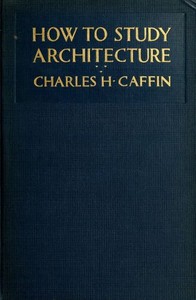
How to Study Architecture — Text and Context
(0 User reviews)
1813
Project Gutenberg
2019
Not confirmed
Architecture -- History
Readers of public-domain and historical texts
Project Gutenberg digital edition
en
Edition facts
Words
152,840
Reading time
665 min
Text sections
31
Before opening How to Study Architecture — Text and Context, the edition data offers a quick orientation: 152,840 words, 11 hr 5 min estimated reading time, and 31 detected text sections.
The text analysis averages about 23.5 words per sentence, while the detected sections provide another way to judge how the source is divided.
Project Gutenberg metadata also associates the work with “Architecture -- History,” connecting these edition facts with the source record’s subject description.
Source:
Project Gutenberg record #60830
An architectural history tracing building evolution as an expression of successive civilizations, with detailed technical analysis of structural and ornamental developments from primitive to post-Renaissance periods.
Read the complete public-domain text at its original source.
Read on Project GutenbergCharles H. Caffin's How to Study Architecture (1917) organizes its survey around the premise that architecture is 'the product and expression of successive phases of civilisation.' The book moves chronologically from primitive structures through Egyptian, Classic, Gothic, and Renaissance periods, concluding with post-Renaissance developments. Each section pairs a chapter on civilization with one on architecture, allowing Caffin to connect social conditions to building forms.
The excerpt on stained glass illustrates Caffin's method: he traces technical evolution—from Byzantine-influenced 'jewel-like patterns' and pot-metal glass to the later use of enamel paints and 'flashing'—while linking changes to broader artistic trends. His attention to material processes, such as the fusion of ruby glass layers or the application of silver stain, grounds stylistic observations in concrete craft details.
Narrative Voice and Organizational Strategy
Caffin adopts an authoritative yet accessible tone, addressing the reader directly in the title's imperative 'How to Study.' The book's structure reflects a pedagogical aim: each period is introduced with a civilization chapter before examining its architecture. This dual-chapter format allows Caffin to present architecture as embedded in cultural context rather than as isolated monuments. His prose is descriptive and analytical, avoiding overt judgment while emphasizing evolutionary connections. For instance, he notes that early stained glass 'shows the influence of the Byzantine enamellers,' linking technique to prior artistic traditions. The voice remains consistent throughout, maintaining a steady expository pace that prioritizes clarity over flourish.
Pacing and Technical Detail in the Stained Glass Passage
The stained glass excerpt demonstrates Caffin's careful modulation of pace. He begins with broad historical context—York Minster as a case study spanning four centuries—then narrows to specific technical developments: pot-metal glass, flashing, silver stain, and enamel paint. Each innovation is introduced with a temporal marker ('gradually,' 'about the beginning of the fourteenth century,' 'finally'), creating a clear chronological progression. The level of detail intensifies as he describes the grinding of ruby glass or the stippling of brown paint, yet he never loses sight of the larger narrative of artistic change. This balance between granular craft description and overarching historical movement characterizes the book's approach throughout.
Recurring Motifs: Ornament as Historical Index
Caffin frequently uses ornamental details as markers of period and place. In the Gothic section, he specifies the 'ball-flower' and 'four-leaf flower' as characteristic of early English Decorated style, then notes the shift toward naturalistic ivy, oak, and vine leaves. The Tudor rose, portcullis, and fleur-de-lys are tied to political symbolism—the union of York and Lancaster, the claim to the French throne. This method of reading ornament as evidence of broader cultural forces recurs across the book. Similarly, in stained glass, he interprets the transition from medallion figures to full-scale canopied saints as reflecting changing devotional priorities. Caffin's eye for such details turns decorative choices into historical documents.
Readers approaching How to Study Architecture will benefit from attending to Caffin's integration of technical process and cultural context. His habit of linking specific ornamental or structural features to broader civilizational phases rewards careful reading. The book's chronological sweep and consistent method make it useful as both a reference and a continuous narrative, though its early twentieth-century perspective should be noted. For those tracing the evolution of architectural detail, Caffin's precise descriptions of materials and techniques offer a grounded entry point.
That gray afternoon, How to Study Architecture kept pulling me from flying buttresses to forgotten craftsmen, until the rain blurred the window and I realized I was less interested in cathedrals than in the people who chose their stones. Closing it, I found my hand reaching for Secrets of Earth and Sea — A Reader’s Guide, a quieter book about exactly that—the human ache beneath every structure, whether built of granite or tide.
There are no reviews for this eBook.
There are no comments for this eBook.
Reader reflection
Take a moment to reflect on this book
Create a short personal record of your experience with this book.
Your progress
0
/
10
2
Did this book hold your interest?
3
Is this a title you would suggest to others?
4
How much effort did this book require?
5
How clear did the writing feel?
6
Would you start a conversation about this book?
7
What did you think about the pace?
8
Do you expect to return to this book?
9
Which lesson or insight stayed with you?
10