1

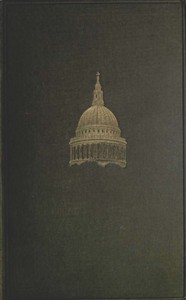
Sir Christopher Wren: His Family and His Times With Original Letters and a Discourse on Architecture Hitherto Unpublished. 1585-1723. — Background and Themes
515
0
Project Gutenberg
2013
Wren, Christopher, Sir, 1632-1723; Wren family; Great Britain -- History -- Stuarts, 1603-1714 -- Biography
Readers of public-domain and historical texts
Project Gutenberg digital edition
en
Edition facts
Words: 94,721
Reading time: 412 min
Text sections: 14
Source:
Project Gutenberg record #42007
Lucy Phillimore's 1881 biography of Sir Christopher Wren draws on family papers and the 'Parentalia' to present the architect's life through his own letters and a previously unpublished discourse on architecture, emphasizing his scientific and practical foresight.
Editorial Edition Score
4.8/5
★★★★★
★★★★★
Calculated from edition completeness, EPUB availability, text structure and catalogue metadata. Not a user rating.
Edition quality
Lucy Phillimore opens her 1881 biography of Sir Christopher Wren by confronting a persistent problem: earlier lives of the architect, she argues, acquaint readers with his works but not with the man himself. To remedy this, she draws heavily on the Parentalia, the family memoir compiled by Wren’s son and grandson, and supplements it with original letters and a previously unpublished discourse on architecture. The result is a portrait that moves between the public builder and the private thinker, often by letting Wren’s own words carry the narrative.
A Biographer’s Dissatisfaction with Earlier Lives
Phillimore is explicit about the shortcomings of her predecessors. James Elmes’s 1823 Life, she notes, contained “many serious errors as to names and dates” because failing eyesight prevented him from correcting proofs. Other sketches—in the British Family Library, the Society for the Diffusion of Useful Knowledge series, and the Biographica Britannica—are dismissed as works that acquaint us with Wren’s buildings but not with Wren himself. This critical stance sets the tone for a biography that aims to recover the person behind the public figure, using family papers and correspondence as correctives to earlier, more impersonal accounts.
Foresight in Stone: Wren’s Practical Ingenuity
One of the most striking episodes in the excerpts concerns Wren’s work on St. Magnus the Martyr. Phillimore recounts that when the churchwardens overruled his proposal to leave space for a footway beside London Bridge, Wren built the necessary arches anyway, bricked them up, and left them ready for the future alteration he foresaw. The anecdote—drawn from the Parentalia—illustrates a recurring theme: Wren’s ability to anticipate structural needs decades in advance. Similarly, his plan to widen the arches of London Bridge by turning every other pair into a single Gothic arch, reducing the fall of water to nine inches, remained a scheme only, but it shows the same pragmatic, long‑viewing cast of mind that Phillimore highlights throughout.
The Texture of Restoration London
Phillimore’s narrative is dense with the fabric of late‑seventeenth‑century London. She describes churches built or repaired by Wren—St. Mildred’s in the Poultry (destroyed in 1872), St. Stephen’s Coleman Street, St. Lawrence Jewry, St. Nicholas Coleabbey, St. Mary Woolnoth, St. Mary Aldermanbury, St. Michael Queenhithe—and notes details such as the “curious old stone carving, in high relief, of the Last Judgment” over a churchyard door, or the “slender graceful spire ever beckoning to the swarming river and riverside population” of St. Michael’s. These observations ground the biography in a specific, tangible cityscape, and Phillimore’s tone is often elegiac when she records that a church “has been swept away and the opportunity is lost.”
Phillimore’s method is to let the documents speak, but she also shapes them into a coherent narrative of character. Readers will find that the most memorable passages are not architectural descriptions but small, human details: the bricked‑up arches, the debate over the Monument’s summit ornament, the list of vicars who became bishops. The biography rewards those who read for the incidental texture of Restoration life as much as for the story of St. Paul’s.
Reader reflection
What did you think of this book?
Answer a few questions and save a private reflection on this device.
Your progress
0
/
10
2
Did this book hold your interest?
3
Would you encourage someone else to read it?
4
Did the language feel accessible?
5
Would you like to discuss this book with someone?
6
Which aspect of the book did you value most?
7
How did the reading compare with what you expected?
8
How original did the book feel?
9
Which lesson or insight stayed with you?
10