1

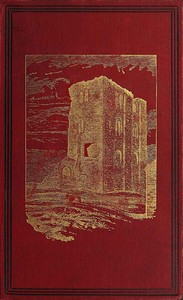
Mediæval Military Architecture in England, Volume 1 (of 2) — A Closer Reading
(0 User reviews)
1402
Project Gutenberg
2020
Not confirmed
Architecture -- England; Architecture, Medieval; Military architecture
Readers of public-domain and historical texts
Project Gutenberg digital edition
en
Edition facts
Words
229,846
Reading time
1000 min
Text sections
52
The source record for Mediæval Military Architecture in England, Volume 1 (of 2) — A Closer Reading measures this digital text at 229,846 words, 16 hr 40 min estimated reading time, and 52 detected text sections.
The text analysis averages about 23.6 words per sentence, while the detected sections provide another way to judge how the source is divided.
Project Gutenberg metadata also associates the work with “Architecture -- England,” connecting these edition facts with the source record’s subject description.
Source:
Project Gutenberg record #64187
Clark's 1884 study examines English medieval castles through earthworks, masonry, and siege accounts, using specific examples like Bowes and Bôves to argue for the evolution from motte to keep.
Read the complete public-domain text at its original source.
Read on Project GutenbergClark opens by acknowledging that these papers were written over decades for various societies, and that the collection inevitably repeats certain arguments—especially his claim that the moated mounds of the ninth century preceded and were later crowned by masonry keeps. The preface frames the work as a series of independent studies, not a unified treatise, which explains both the iterative structure and the occasional redundancy a reader will encounter.
The epigraph from Mason—'Time has moulder’d into beauty many a tower'—sets a tone of ruin and transformation that Clark sustains through precise architectural description rather than romantic nostalgia.
Earthworks as the Foundation
Clark insists that the earliest fortifications were not stone but earth: banks, ditches, and especially the moated mound or motte. He credits himself as the first to set forth this connection between the ninth-century earthworks and the later masonry placed upon them. The reader should watch for how he reads the landscape—the shape of a mound, the line of a ditch—as primary evidence, often more telling than the stonework that survives above ground.
In the excerpt on Bôves (near Amiens), he notes that the earthworks are 'seen to great advantage from the Bôves Station of the Amiens Railway,' a characteristically practical observation that grounds his analysis in accessible viewpoints. He dates the Bôves earthwork to the ninth century, for defence against Northmen, based on its character rather than documentary proof.
The Keep as a Puzzle
Bowes Castle in Yorkshire presents a problem: a single rectangular tower, isolated, with no bonded masonry or foundation traces around it. Clark points out that Norman keeps are usually part of a larger castle complex—Brough, Appleby, Richmond all have surrounding buildings—but Bowes stands alone. He measures it precisely: 82 feet east-west, 60 feet north-south, about 50 feet high, with broad flat pilasters at each angle and midway on each face.
He notes the absence of a base or plinth, save a plain string-course at the upper floor. The churchyard and cottages now crowd its sides, but show no old wall material. Clark does not resolve the puzzle; he leaves it open, letting the reader consider whether the tower was always solitary or whether its companions simply vanished without trace.
Siege Mechanics in the Text
One excerpt describes a siege in vivid technical detail: a wall undermined by props set on fire, a collapse in dust and smoke, then an assault through the breach. The keep, 'built upon a scarped rock and protected by a double wall,' becomes a final refuge. Then a machine appears—sometimes a mangonel scattering small stones, sometimes a single stone 'projected with a velocity exceeding that from a sling.' Fissures appear in the shaken walls.
Clark does not name the source of this account, but the specificity suggests a chronicle. The passage illustrates how he weaves narrative sources with architectural observation: the keep’s double wall and rock foundation are not just features but explanations for why it held out. Readers should note how Clark uses such siege stories to test the defensive logic of the structures he describes.
Iteration and the Reader’s Path
Because the papers were written independently, the same arguments recur—especially the earthwork-to-keep thesis. Clark acknowledges this in the preface, hoping the repetition will be excused. For a first reading, this means the introduction is essential: it lays out the core idea that later chapters will illustrate rather than develop. The castle studies can be read in any order, but the cumulative effect reinforces Clark’s method: measure, compare, and always look for the earlier earthwork beneath the stone.
The dedication to E. A. Freeman, historian of the Norman Conquest, signals Clark’s intellectual allegiance. Freeman’s topographical familiarity with English ground is praised, and Clark’s own work follows that tradition of tying architecture to historical geography.
Clark’s volume rewards a reader who treats each castle account as a case study in a larger argument about continuity from earth to stone. The repeated claims are not flaws but deliberate emphasis. To get the most from the book, start with the introduction, then sample a few castle descriptions—Bowes for its puzzle, Bôves for its earthworks—and note how Clark’s eye for detail always returns to the ground beneath the walls.
Reading through Clark's patient archaeology of castle earthworks, I kept thinking how strange it is that we can know a place so thoroughly yet still feel its mystery. It reminded me of how Impressionist painting: its genesis and development — Background and Themes lingers—not for its facts, but for that quiet sense of seeing something old become newly alive. Both left me with that gentle ache.
There are no reviews for this eBook.
There are no comments for this eBook.
Reader reflection
Take a moment to reflect on this book
Create a short personal record of your experience with this book.
Your progress
0
/
10
2
Was reading this book enjoyable?
3
Is this a title you would suggest to others?
4
How easy was the book to follow?
5
Would this book work well in a reading group?
6
How strongly did the book affect you emotionally?
7
Could you follow the author’s main argument?
8
Would a second reading be valuable?
9
In one sentence, what did you learn?
10