1

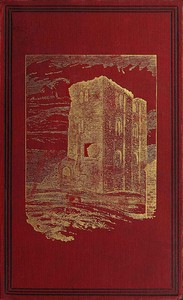
Mediæval Military Architecture in England, Volume 2 (of 2) — Text and Context
(0 User reviews)
1836
Project Gutenberg
2021
Not confirmed
Architecture -- England; Architecture, Medieval; Military architecture
Readers of public-domain and historical texts
Project Gutenberg digital edition
en
Edition facts
Words
287,874
Reading time
1252 min
Text sections
78
Mediæval Military Architecture in England, Volume 2 (of 2) — Text and Context can be approached with a clearer sense of reading commitment from its source measurements: 287,874 words, 20 hr 52 min estimated reading time, and 78 detected text sections.
The text analysis averages about 22.9 words per sentence, while the detected sections provide another way to judge how the source is divided.
Project Gutenberg metadata also associates the work with “Architecture -- England,” connecting these edition facts with the source record’s subject description.
Source:
Project Gutenberg record #65261
Clark's second volume catalogs English castles with precise architectural detail, tracing Norman, Decorated, and Perpendicular phases through masonry, windows, and floor plans. The narrative voice is methodical, shifting from broad historical context to granular observations of ashlar, garderobes, and curtain walls.
Read the complete public-domain text at its original source.
Read on Project GutenbergClark’s methodical cataloguing of English castles in this second volume is driven by a relentless attention to masonry, window tracery, and floor levels. At Kenilworth, for instance, he notes that the state apartments occupy the second floor, with a grand fireplace below, and that the north window is “of one light, and of great length, divided by transoms.” Such precise observations recur throughout, as he distinguishes Norman foundations from Decorated or Perpendicular insertions, often by the quality of ashlar or the shape of an arch.
The narrative voice is that of a patient surveyor, shifting between broad historical context and granular detail. Clark rarely pauses to summarise; instead, he moves from one structural element to the next—garderobe tower, kitchen, gatehouse—as if walking the reader through the site. This steady, almost architectural pacing gives the work a cumulative authority, even when the excerpts are incomplete.
The Surveyor’s Gaze: Masonry and Material Evidence
Clark’s language is that of a working antiquary, not a romantic historian. He describes the material of a wall as “excellent ashlar” or dismisses later additions as “in wretched taste and of base materials and workmanship.” This evaluative vocabulary is consistent: he praises “fine early Perpendicular windows of two lights, trefoiled” while noting that Tudor work is often inferior. The voice is confident, even blunt, and it relies on visual evidence rather than documentary claims.
His method is to isolate each building phase by its stonework and window forms. At one site, he identifies a Norman base beneath Decorated remodelling; elsewhere, he notes that a curtain wall “7 feet thick” is “evidently original” because it bonds into the keep. These judgments are never explained at length—they are stated as facts, as though the reader shares his eye for masonry. The effect is a narrative that moves quickly from one technical observation to the next, with little rhetorical flourish.
Pacing Through the Ward: From Keep to Garderobe
The structure of each entry mirrors the physical layout of the castle. Clark typically begins with the keep or main tower, then moves to the inner ward, the hall, the kitchen, and finally the gatehouse. This sequential order gives the prose a steady, almost architectural rhythm. At Kenilworth, he proceeds from the state rooms to “a smaller pile of buildings” for servants, then to the garderobe tower (“a grand rectangular structure projecting from the curtain”), then to the kitchen, and finally to the gatehouse with its Elizabethan arms.
This pacing is deliberate: each paragraph corresponds to a distinct building or feature, and transitions are marked by phrases like “next to these rooms” or “connected with these buildings.” The reader is guided through the site as if on a tour, with Clark as the taciturn guide. The effect is cumulative—details of windows, fireplaces, and doorways build into a coherent picture of the castle’s evolution, without the need for summary.
Voice and Judgement: The Antiquary’s Tone
Clark’s narrative voice is that of a specialist speaking to other specialists. He assumes familiarity with architectural terms—ashlar, transom, curtain, garderobe—and rarely defines them. His judgments are delivered as plain statements: “The kitchen, wholly of Decorated date, is a large rectangular building.” When he notes that a window is “what is also curious,” the aside is brief and understated.
This tone gives the work an air of authority, but it also means that the pace is unvarying. There are no dramatic shifts in tempo; the prose maintains a steady, descriptive gait throughout. The excerpts show no rhetorical peaks or valleys—only the consistent, patient accumulation of architectural fact. For a reader attuned to changes in narrative pace, this uniformity is itself a feature: Clark’s voice never wavers, and the castles are presented as a series of equally important structural puzzles.
Clark’s volume rewards a reader who is willing to move slowly, following his eye from foundation to roof. The absence of narrative drama is not a flaw but a method: each castle is a collection of material decisions, and Clark’s job is to record them. For those interested in the physical fabric of medieval fortifications, this steady, unadorned prose is precisely the right tool. Approach the text as a field notebook, and its value becomes clear.
I keep returning to Clark’s stone-by-stone patience, the way he lets walls speak their centuries. It reminded me of something quieter in Olympic Victor Monuments and Greek Athletic Art — Story, Setting & Ideas, where victory isn’t a shout but a carved stillness. Both books hold time gently, as if masonry and marble could remember what we forget. That lingering feel stays with me.
There are no reviews for this eBook.
There are no comments for this eBook.
Reader reflection
Record your reading impressions
A brief reflection can help important ideas stay with you longer.
Your progress
0
/
10
2
Did this book hold your interest?
3
Would you pass this book on to a friend?
4
How demanding did the text feel?
5
How closely did the book connect with your experience?
6
Did you gain anything practical from the text?
7
How clear did the writing feel?
8
Was the book moving at the right speed?
9
Which lesson or insight stayed with you?
10